
Why Cable And Fiber Customers Are Switching to Starlink
Starlink is no longer just for people without other broadband options. Some cable and fiber customers are switching due to reliability problems, customer service, and other frustrations with traditional ISPs.

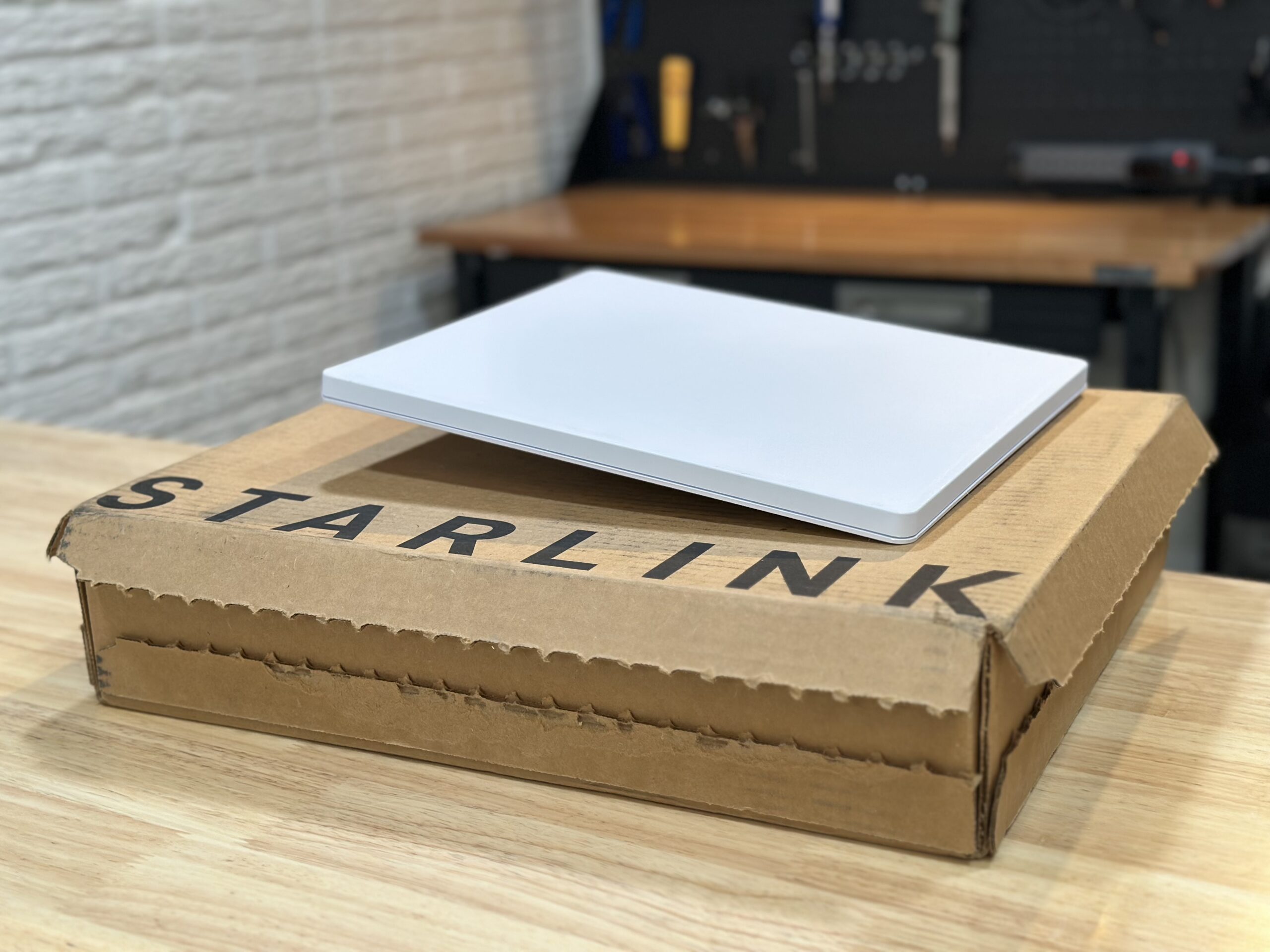
Historically, Starlink has been viewed as internet for people who don’t have any other good options. If your alternatives are DSL or 4G LTE, Starlink is the obvious choice. But that old assumption is changing.
I’ve noticed a small but interesting group of customers voluntarily leaving cable, and even fiber, for Starlink. These aren’t necessarily people living in rural areas. Some live in suburbs and cities where fast, wired service is readily available.
To understand why people are switching to Starlink, I spent time going through social media communities, ISP support forums, and responses from my own YouTube audience. A few patterns came up repeatedly, and the biggest one surprised me.
Reliability Matters More Than Speed
By far, the most common reason that people gave for switching to Starlink was reliability. That surprised me, given that satellite services are often associated with reliability issues over their terrestrial counterparts. A fiber or cable connection should, theoretically, be more reliable than internet delivered from satellites hundreds of miles up.
But it turns out that the reliability of cable or fiber depends heavily on the local provider and the condition of its infrastructure. I found reports from customers with very fast connections on paper, who were dealing with frequent outages, random disconnects, and packet loss.
One cable customer had a gigabit connection, but experienced so many outages that they tried Starlink out of desperation. They found it to be much more consistent and reliable, even if the maximum download speed was 1/3 of their previous gigabit internet. Another customer tried switching from Starlink to newly available fiber in their neighborhood, only to return after finding the fiber connection unreliable. A Spectrum customer I came across reported having outages multiple times per week, sometimes lasting hours at a time.
These examples highlight something that often gets lost when comparing internet services. Max download speed isn’t everything. Someone might technically be giving up a 500 Mbps or gigabit wired connection by moving to Starlink. But if that faster connection isn’t reliable, the speed advantage becomes a lot less important.
Starlink has been extremely reliable in my own experience (I’m coming up on 6 years with the service). Major regional or network-wide outages have been rare. I think there has only been one noteworthy network event this year so far. Severe rain and snow can temporarily interrupt the connection, but normal day-to-day reliability has been excellent for me. According to my UniFi router dashboard, my uptime for the last month has been 99.9%.
That kind of reliability is more valuable to some customers than having the fastest possible speed test result.
Starlink Avoids Local Infrastructure Issues
There is another reliability advantage with Starlink, it doesn’t depend on the local infrastructure.
One Spectrum customer I found had backup power at home, but when the utility power went down, the local Spectrum infrastructure also stopped working. Their generator kept the house running, but it couldn’t keep their internet connection online.
Starlink works differently. As long as the Starlink hardware in your home has power, your connection isn’t dependent on the cable, fiber, or other terrestrial infrastructure immediately surrounding your home. The signal travels from your dish to one of thousands of satellites orbiting overhead. From there, data is transmitted back to a ground station in your country. There are usually multiple for redundancy. Worst case, Starlink satellites can use their optical laser links to send data to anywhere else in the world.
That advantage becomes particularly valuable after severe storms and natural disasters. Power poles can come down. Aerial fiber and cable lines can be damaged. Repairs to local infrastructure can sometimes take much longer than restoring power to an individual home. For someone with a generator or battery backup, Starlink provides disaster resilience beyond what cable and fiber are capable of.
Customer Service
Another major reason for switching to Starlink was customer service. I know, I know… Starlink doesn’t have a great reputation here. Although Starlink customer support has improved over the years, getting through frontline AI support and reaching a human can still be frustrating.
But as it turns out, Starlink customer service isn’t the worst in the industry. Some fiber and cable companies are apparently much worse. Many of the complaints I found weren’t simply about a rude service rep or a long hold time. They involved customers experiencing real performance or reliability problems, and being unable to get those problems resolved.
A common pattern I saw in these complaints was that the ISP blamed the customer’s router, home network, or wiring without identifying a lasting solution. In some cases, customers also reported being charged for those service visits, even if no resolution was reached. Eventually, some of them simply gave up and went with Starlink.
Starlink doesn’t necessarily need to provide extraordinary customer service to benefit from this. For someone who has spent months fighting an unresolved problem with their existing ISP, being another viable internet option might be enough.
Upload Speeds Are Closer Than You Think
Cable providers tend to advertise their download speeds because that’s where the numbers look most impressive. A plan offering 500 Mbps or 800 Mbps sounds substantially faster than Starlink, which typically delivers 200-400 Mbps down.
But download speed is only half of the connection. I found multiple customers who switched because of problems on the upload side. One Spectrum customer was struggling with packet loss and disconnects while working from home. Another Comcast customer had a gigabit connection, but experienced problems when using an employer VPN. In both cases, the real-world usability of the upstream connection mattered more than the impressive download speeds.
Starlink upload speeds are much lower than its download speeds, but the service can still outperform some asymmetrical cable plans. On my Residential Max plan, I typically get upload speeds in the 40-60 Mbps range. That can matter if you regularly do video conferencing, upload large files, operate cloud-based security cameras, or run servers from home.
And in terms of upload packet loss, a slower Starlink connection that behaves consistently can be more useful than a much faster connection with packet loss, unreliable upload speeds, or high latency.
Starlink Is Finally Affordable
Price has also changed the equation. Early Starlink customers had a substantial upfront hardware cost in addition to a relatively expensive monthly subscription. That made Starlink easy to justify when there were no other broadband options, but much harder to recommend to someone who already had cable or fiber.
The situation is different now. Starlink has introduced cheaper Residential plans and a $0 equipment lease program, helping to reduce costs substantially. Now, most people who sign up to Starlink will only pay about $20 up front for shipping, with monthly service starting at just $55/month.
That makes switching much easier for someone who is already frustrated with an existing ISP. Instead of spending hundreds of dollars just to find out whether Starlink works well at their home, some customers can get started with little upfront expense and a monthly price that is much closer to traditional broadband.
Data Caps, Promotional Pricing, And Billing Games
Some customers aren’t leaving because of performance at all. They’re simply tired of dealing with their internet provider.
One example I found involved a Cox customer in Phoenix who switched largely because of the provider’s monthly data cap. Starlink, by comparison, doesn’t use the same type of hard monthly data allowance on its Residential plans.
Billing practices are another source of frustration. Traditional ISPs frequently use promotional prices, bundles, introductory discounts, and other offers that can make the actual long term cost of service difficult to compare. A plan might look inexpensive when you sign up, only for the price to increase substantially after the promotional period ends. The best pricing can also depend on bundling internet with television, phone, or mobile service.
My experience with Starlink billing has generally been much simpler. I know what my monthly Residential plan costs, and that is what I expect to be billed. That transparency has value, even if Starlink isn’t the absolute cheapest option.
Starlink Does Something Cable And Fiber Can’t
There’s also a completely different path bringing some people to Starlink, travel internet. The Starlink Mini, an ultra-compact antenna made for travel, is popular with RV owners, campers, and people who need internet away from home.
Someone might initially buy Starlink purely for their off-grid adventures. They use it at a campground, while working remotely on the road, or somewhere their normal home internet connection obviously can’t follow them. Then they discover that Starlink works better than they expected, and completely changes the way they feel about satellite internet.
If their cable or fiber provider later raises prices, has another outage, or fails to resolve a support problem, Starlink is no longer an unfamiliar satellite service. It’s something they have already used successfully. That makes switching their home connection a much easier decision.
Portability is also something a wired ISP simply can’t replicate. A household that already uses Starlink while traveling may see additional value in keeping more of its internet service within the same ecosystem.
Fiber Doesn’t Automatically Equal Good Internet
Fiber is generally considered the gold standard for residential broadband, and for good reason. A properly designed and maintained fiber network can provide extremely fast, low-latency, symmetrical service. But having fiber available doesn’t guarantee that every customer will have a great experience.
The local provider still matters. Installation quality, network management, oversubscription, pricing, and customer service are all variables that will vary with every local provider. And aerial fiber can still be vulnerable to storms, falling trees, and damaged utility poles, even if your provider is great in all other areas.
I’m not suggesting Starlink is technically superior to fiber. In most situations, a reliable fiber connection is going to have major performance advantages. But the comparison changes when the fiber connection itself is unreliable or the provider behind it becomes difficult enough to deal with.
That appears to be exactly what is happening with the small number of fiber customers I found who decided to switch to Starlink. It isn’t really a question of fiber vs Starlink, it’s more about one internet provider compared to another. It’s about who offers the best reliability, pricing, support, and overall experience.
Bottom Line: Starlink Doesn’t Have To Be Faster Than Fiber
The biggest takeaway from all of this is that speed isn’t everything. Starlink doesn’t need symmetrical gigabit performance to compete for every customer. It only needs to provide a connection that is reliable enough, fast enough, affordable enough, and easy enough to use that someone frustrated with their existing provider sees it as a legitimate alternative.
That doesn’t mean cable and fiber customers are suddenly abandoning wired internet in huge numbers. They aren’t. And it certainly doesn’t mean fiber or cable broadband is becoming obsolete. This is a much smaller shift.
What has changed is the idea that Starlink is exclusively a last resort internet service.
For years, many households effectively had one serious broadband provider. If that company offered poor service, raised prices, imposed a data cap, or failed to fix reliability problems, there often wasn’t much the customer could do about it. Starlink gives those customers another choice.
It doesn’t have to be objectively better than every cable or fiber connection. It just has to be better than the particular connection someone is fed up with. And for a growing number of customers, that appears to be enough.

I keep going back and forth as to if I should get Starlink. My current ISP is just DSL over old copper lines, my only option, and it can be pretty unreliable at times plus it is slow (11 Mbps at the most) and expensive. The problem is I have large trees to the north of my house. The Starlink app said it was a fine location at the top of my house which is 14 feet high, but I look at those trees and think “there is no way it will work very well.”
Awesome informative information
I am a StarLink Customer for about a year now I Live out in the country so my
Internet options have been very Limited
Service is good my only issue is the monthly cost it’s high.
Keep up the Great work !!!
My fiber was not good. On the weekends we buffered to where we simply did not watch. I would contact them but nothing changed. We paid $100 for the service. When Starlink offered free rental of Gen 3 equipment with $45 monthly, we switched over. We love it. I assumed I would have to up the speed and pay more, but we are getting along great just like it is. My daughter did the same thing and they game on theirs. Very satisfied.
You have certainly had a different experience than I. On weekends, I am in a fairly frequent beachball world. It’s constantly buffering. This is hugely annoying when watching sports as the action is often missed. Starlink CS has given me assistance time but not resolved the problem that they always assume is on my end. It is not. I do not suddenly develop local network issues when the streaming access is high. No patterns change in this single user environment. Starlink simply does not provide the bandwidth to accomodate active periods during sports viewing and high interest events. They will only solve the problem with more satellites. Enhancing their current service areas is more critical than expanding the area. I guess, it is easier to get new customers than it is to get former customers back again.
Agree. I have ATT gigabit capable FIOS at home with downstream hardware that can handle the speed but that speed is wasted because most Internet traffic that comes into my home doesn’t utilize it. I am finding that network congestion is more of a limiting factor than my download/upload speeds. There is nothing more frustrating that confirming you have gigabit DL speed yet a file is downloading at a snail’s pace because the problem is at the other end of the pipeline. So cable provider’s gigabit advertising pitch is aspirational, not actual.
I have a Starlink Mini on my camper and have found that I get more than more than adequate speed to handle my business and entertainment needs ranging from the southern tip of Baja California to the northern tip of Newfoundland. And having the Internet underway is unreal. Starlink has been a game changer for us.
We’re keeping both the Starlink and my ATT FIOS for redundancy.
Is it possible in the near future to reduce the Mexican monthly cost of $1,305 MXN=$72 USD as it is 2x more than Total Play & Telmex Infinitum which are fiberoptic systems?
So make fixed ip cheaper then.