
Starlink Mini Is Now $149… But Mini 2 Is Coming
The Starlink Mini just dropped to its lowest price ever, $149. Should you buy now or wait for the upcoming Mini 2?

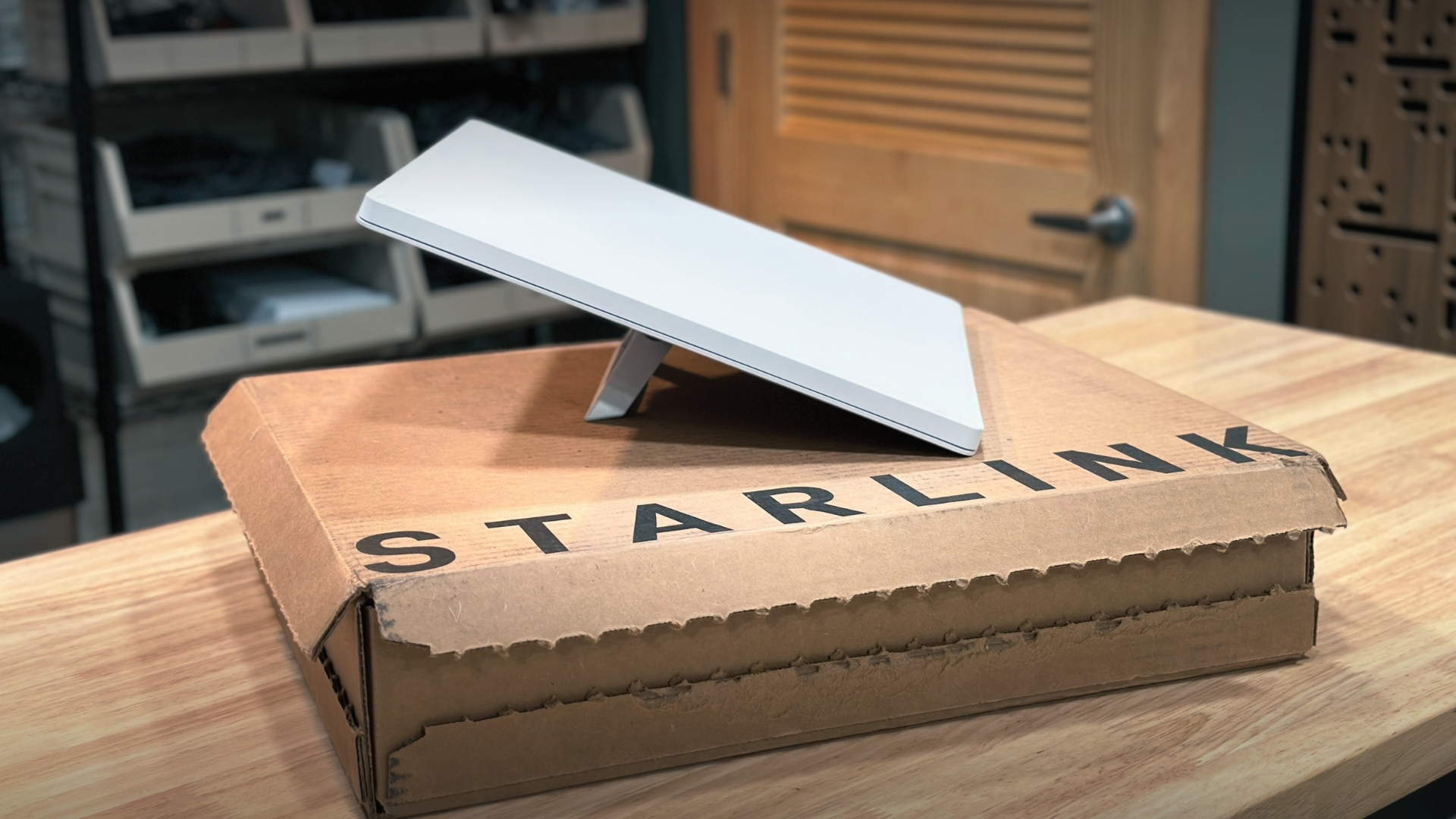
The Starlink Mini is now just $149, the lowest price yet for my favorite Starlink dish. It’s compact, power efficient, and versatile enough for camping, road trips, or throwing in a backpack when you need internet away from home.
But the timing raises an obvious question. With Starlink cutting the price and offering free Mini rentals to more existing customers, is the company clearing inventory ahead of the next generation?
We don’t know whether that is the reason for these promotions. However, details pointing to a new Mini have been emerging, and that leaves potential buyers with a choice: take the deal now, or wait for the Mini 2?
New $149 Price
The new price is $100 below the previous $249 MSRP, and is available to both new and existing customers. It looks like this deal is only showing up on the Starlink website. I’ve checked several 3rd party retailers, like Home Depot, and it doesn’t appear the price has updated there yet.
You can buy it with an upfront payment for the full amount, but Starlink also offers the option to spread the purchase price over 12 monthly installments without additional financing charges. That works out to roughly $12.42 per month for the hardware, with service billed separately.
For someone who has been considering a Mini, that’s a much lower upfront cost than before. But a good deal doesn’t automatically answer whether you should buy the current hardware when a replacement appears to be on the way.
For the rest of this article, I’ll refer to the current model as the Mini 1 and the upcoming model as the Mini 2. The changes below are based on the reported hardware and firmware changes by credible sources. They aren’t a complete set of final product specifications, and Starlink hasn’t officially released any details.
Battery
One of the most interesting reported changes is a Starlink-branded battery for the Mini 2.
We already have third-party batteries for the Mini 1, including packs that attach directly to the dish to create a compact, all-in-one internet setup. It looks like Starlink is working on its own approach for the next generation.
The details are still unclear. We don’t know whether the battery will be built into the dish, removable, or sold as an optional accessory. That distinction matters. An optional battery would give customers more flexibility, while a built-in battery could affect the weight and thickness of the Mini 2.
A relatively small battery would make sense for portability. I speculate that it could be under 100 Wh with airline travel in mind, but the final capacity hasn’t been established.
A battery from Starlink would be a welcome addition. Whether it’s a reason to wait depends on how it actually works, how long it lasts, and what it costs.
USB-C
The Mini 2 also appears likely to get a USB-C power input.
The current Mini uses a DC barrel connector. You can already power it from a suitable USB-C power bank or power station, but you need an adapter cable to connect that source to the dish.
Moving to a native USB-C input would remove that extra step. It would be more convenient for anyone who already carries USB-C charging equipment for phones, laptops, and other devices.
That doesn’t mean any USB-C charger or cable would necessarily work. We’ll need the final power requirements to know exactly what the Mini 2 needs.
For me, this is a useful convenience upgrade. It simplifies something the Mini 1 can already do with the right adapter.
Smaller Size
The Mini 2 may shrink a tiny bit because it uses a slightly smaller printed circuit board (PCB), but that doesn’t give us the exact dimensions of the finished dish. It suggests a modest size reduction rather than a dramatically smaller product. We also don’t know the final weight or thickness. If a battery is integrated into the hardware, it could offset some of the benefits of a smaller antenna footprint.
The Mini 1 is already easy to pack and transport. A smaller version would be nice, particularly for backpacking or a compact vehicle installation, but we need the finished dimensions before judging how much of a difference it makes.
Duty Cycle
Another reported change involves the transmit duty cycle, a reduction from 75% to around 11%. Transmit duty cycle describes the proportion of time the antenna transmits over a given interval. It doesn’t directly tell us the download speed, and those figures alone aren’t enough to predict the Mini 2’s real-world performance.
My interpretation is that this could be part of Starlink’s effort to improve power efficiency, especially if the Mini 2 is designed to run from a relatively small battery.
Higher Thermal Limits
A firmware leak reveals that the Mini 2 will have higher thermal limits, helping to avoid overheating.
Heat is something I’ve run into myself with the Mini 1. During summer battery runtime tests, leaving the dish outside in direct sunlight can cause it to overheat. A hot vehicle installation can present similar challenges.
Higher temperature thresholds could help the Mini 2 keep operating in conditions where the original starts protecting itself from heat. However, higher thresholds alone don’t establish how much better the finished product will handle those conditions. If Starlink adds a battery, the system needs to manage the temperature of both the antenna hardware and the battery.
Buy A Mini Now, Or Wait For The Mini 2?
Based on what we know so far, the Mini 2 looks like an incremental upgrade. A battery option, USB-C input, a slightly smaller package, and possible improvements to power efficiency and heat tolerance would all be welcome.
But nothing discussed so far makes the Mini 1 obsolete.
You can already use the current Mini with a USB-C power source. You can already buy a battery that attaches to it. And it already delivers a portable internet connection in a package small enough to carry in a backpack.
My recommendation comes down to when you’ll actually use it.
If you have a camping trip, road trip, or another use for a Mini in the next few months, I think buying the Mini 1 for $149 makes sense. You’re getting useful hardware at its lowest price yet, and you can start using it immediately.
If you don’t need one anytime soon, I would wait and see. We still don’t have the complete Mini 2 specifications, pricing, or a confirmed release date. There could be an additional feature that changes the decision, or the final battery design might turn out to be exactly what you want.
I wouldn’t buy a Mini purely because it’s on sale if it’s going to sit unused. But I also wouldn’t put off a trip or a useful setup just because a newer model is coming. If you have a use for it now, the possibility of a better version later doesn’t take away what it can do today.
If you decide to take advantage of this $149 deal, be sure to order using my Starlink referral link. You’ll get $100 cash or service credit, and it helps support the blog.

Hello. Is the $149 price also for customers with the original unit activr
Just the best