
Starlink To Users In Africa: Service Will Be Terminated In Unauthorized Locations
Starting April 30th, Starlink will shut down their services in unauthorized countries in Africa. They sent an email notice to affected customers.

- Author
- Published
- Community
- 15 comments
An interesting situation is unfolding in Africa right now. Since launching in late 2020, Starlink's mission has been to provide high speed, low latency internet to areas where internet connectivity has not been available, is unreliable, or is too expensive. This is especially true for rural and underdeveloped areas of the world.
At this point, Starlink operates a global service. They serve millions of customers around the world, on virtually every continent. Although coverage is technically global, Starlink only sells hardware and services to locations where they have local government authorization. On their website, Starlink allows you to easily check for availability using your address, or by checking the availability map.
There is a loophole to get around local government approval, though. Starlink's Mobile (aka Roam) service plans are designed for travelers and digital nomads. By subscribing to a Roam plan, users can take their Starlink dish almost anywhere in the world and stay connected. People living in countries where Starlink isn't officially licensed to operate have been buying kits in neighboring countries (where Starlink is available), and then using the Roam plan get service in the unauthorized country where they actually live.
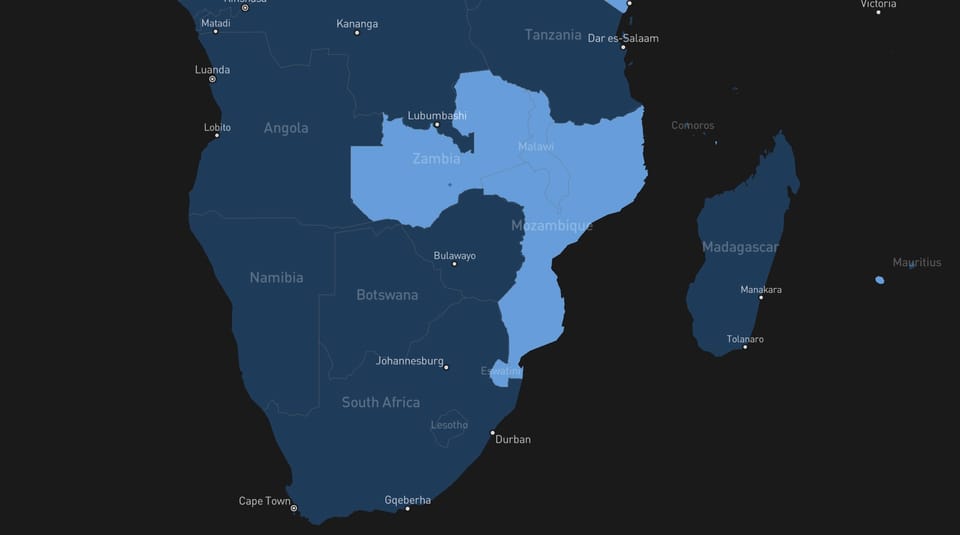
For example, Starlink is approved and available in Zambia. But Zambia's neighbor, Zimbabwe, does not have local approval yet. To get around this, people are buying kits in Zambia and then importing them into Zimbabwe. By subscribing to the Regional Roam plan, people living in Zimbabwe have been able to get service, even though Starlink doesn't officially offer service or hardware in the country. The loophole has opened up a huge black market for Starlink devices, and not just in Africa. Unauthorized resellers are popping up left and right, finding ways to source large numbers of Starlink kits to resell to people living in countries where Starlink is not yet available.
Apparently, all this activity has caught the attention of local governments. Last week, it was reported that Zimbabwe instructed Starlink to shut down all services in the country. Shortly after that, Starlink started sending out emails to customers who were using the Roam service plan in the area. The email states:
Starlink email to Roam customers in Africa
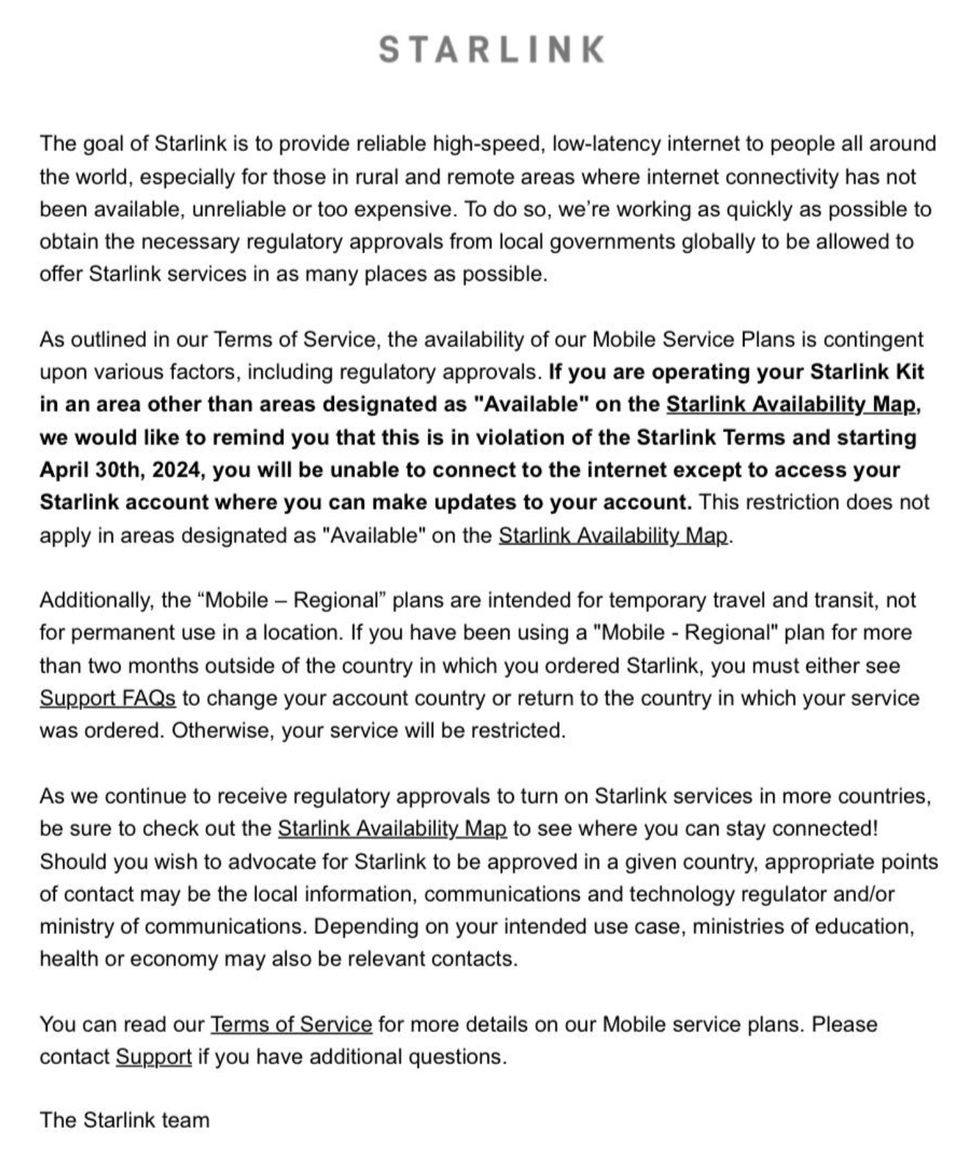
According to the email from Starlink, they will be terminating internet access in unauthorized countries starting April 30th. Users will be able to access their account portal at Starlink.com to manage their subscription, but all other services will stop. The email seems to target only African users at the moment. From what I've seen on social media, only users in Africa are receiving the notice, even though people in other continents are using the same Roam loophole to get service in unauthorized locations.
The Techzim news article I linked to earlier estimates there are about 5,000 Starlink users in Zimbabwe alone. I'm sure there are many more in other unauthorized countries around Africa. Reactions on social media are what you would expect, with those affected scrambling to figure out their next move as the April 30th termination date closes in.
There is another development as well. In the warning to Roam users in Africa, Starlink says that Roam users who stay in a country (even a supported country) for more than 2 months will be forced to update their address to that location. If service isn't available in the location, service will be terminated. This applies to the Regional Roam/Mobile plan. Starlink says that plan is designed for temporary travel, not permanent use in one location outside of your original country. Users can upgrade to Global Roam to avoid the 2 month rule.
I'm sure we will see more battles ahead in regards to Starlink internet service. After all, Starlink provides something revolutionary - global high speed internet access, free of the restrictions and censorship that are common in some parts of the world. Starlink poses a threat to governments who want control and oversight of their citizens' internet activities. By all accounts, Starlink is doing their best to navigate the challenging regulatory hurdles, but authorization will take time in some countries, and it will be impossible in others.


Discussion
15 Comments